¶ Summary
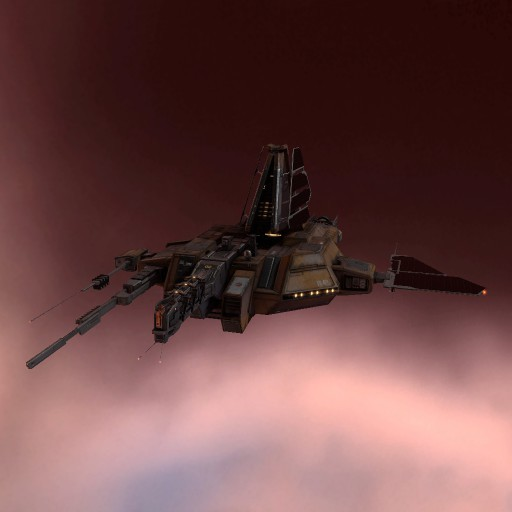
The Probe has four mid slots available for exploration and propulsion modules. Like any exploration frigate, the Probe’s mids are usually fit with a microwarpdrive and a data and relic analyzer, which leaves one slot free for an additional assistance module—typically a Scan Rangefinding Array. (You might be tempted to put a shield extender here for defense, but a tackled explorer is a dead explorer, and shield extenders make you easier to tackle by increasing signature radius.) Low slots are best fit with inertial stabilizers and/or a warp stabilizer for faster escapes. Keep in mind that warp stabilizers reduce lock range and speed; having more than one makes locking exploration sites uncomfortably slow.
The exploration Probe is also commonly fitted with a Compact or Improved Cloaking Device, so that the ship can cloak while probing signatures in unsafe space. The Probe cannot, however, fit a Covert Ops Cloaking Device. So, when cloaked, it cannot warp and suffers a significant penalty to speed.
Tech I exploration frigates have the largest cargo capacity of any frigate. This makes the Probe a speedy freight courier and distribution mission runner. By fitting the ship with expanded cargohold modules and cargohold optimization rigs, it is possible to build a Probe that can carry over 1200 m3 of cargo. Or, by exchanging some of these for warp stabs, the Probe can be made into a low-sec courier that can evade insta-pointing gate camps.
The Probe can be fit for combat probing, by using an Expanded Probe Launcher in place of the standard Core Probe Launcher. However, combat probing requires considerably greater in-game and pilot skill than site probing. Successful combat probers need to be able to locate targets in a single quick scan, or at most two. Pilots that have the Astrometrics skill levels required to do this, and have the experience necessary to use D-Scan intelligence to pinpoint those targets before scanning, are typically already trained into Covert Ops frigates anyway.